Nairobi AFCON 2027 guide: stadiums, where to stay and getting around
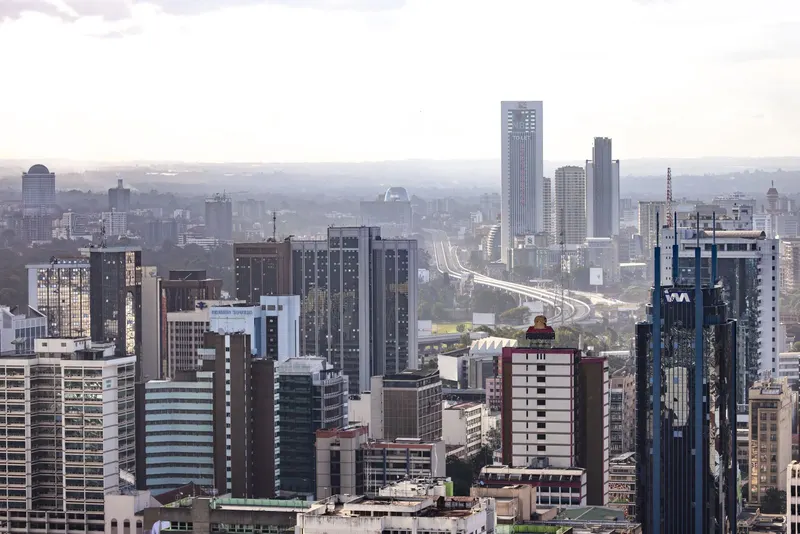
Nairobi AFCON 2027 plans put two of Kenya's proposed stadiums in one city, making it the tournament's busiest base: the new 60,000-seat Raila Odinga International Stadium on Ngong Road, and the older Moi International Sports Centre at Kasarani. The tournament runs from 19 June to 17 July 2027. Fans who base themselves in Westlands or Kilimani, travel by Bolt or Uber and keep their paperwork in order will find Nairobi an easy city to follow a team from.
This guide covers the two grounds, the airport, where to stay, getting around, money, the weather and the rules that catch visitors out. CAF has not yet confirmed the venues, so check our hub before you book anything that cannot be changed.
Nairobi AFCON 2027 stadiums
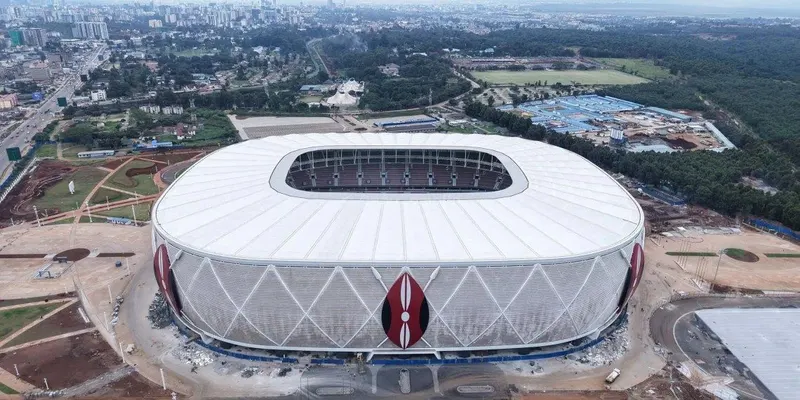
Raila Odinga International Stadium, built under the name Talanta, sits beside the Jamhuri showground off Ngong Road, near Dagoretti Corner, about 10 km west of the city centre. It has 60,000 planned seats and is Kenya's new flagship ground. In March 2026 CAF said it did not yet meet the standard to host matches. By September 2026 CAF inspectors were praising its progress, and the government expects to hand it over in December 2026.
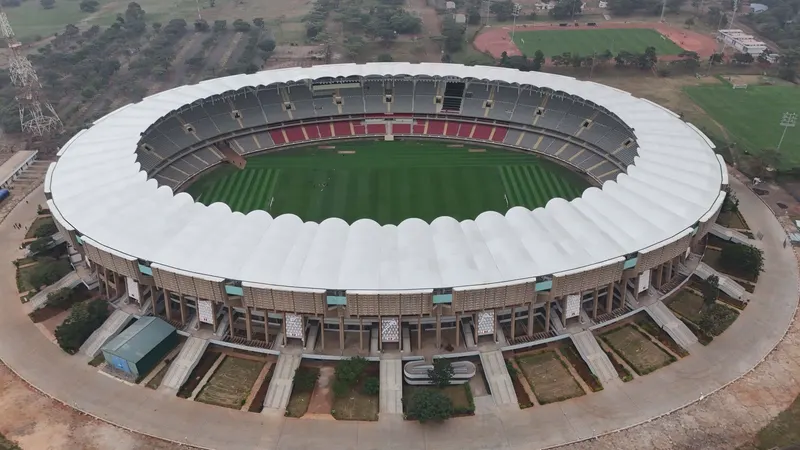
Moi International Sports Centre, Kasarani, is off Thika Road in the north-east of the city. It is Kenya's established national stadium, and it hosted matches at CHAN 2024, played in August 2025. The government says works will finish by December 2026, and that its capacity may have to be cut to meet CAF rules.
The two Nairobi AFCON 2027 grounds are on opposite sides of the city. With traffic, the drive between them can take well over an hour, so do not plan to see a match at one and the next kick-off at the other on the same evening.
Arriving at Jomo Kenyatta airport
Jomo Kenyatta International (NBO) is about 15 km south-east of the centre. Before you land you need your eTA and Kenya's compulsory health insurance, and there is no eTA desk at the airport.
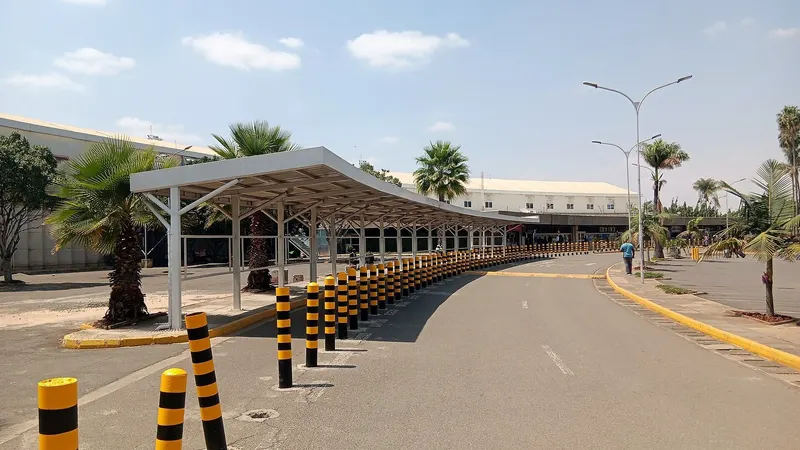
After immigration and customs, you reach the arrivals hall. Safaricom has a counter there, where you can buy a SIM card with your passport. Take cash from a bank machine, because the exchange desks give worse rates than the city. If you bring US dollars, only notes printed from 2009 onwards are accepted, and torn notes are refused.
For the city, open Bolt or Uber and walk to the marked pickup area. Fans have reported paying about KSh 2,000–3,500 to Westlands and KSh 1,800–3,000 to the centre, plus about KSh 200–400 in tolls on the Nairobi Expressway. The ride takes 25–40 minutes, or up to an hour at the 07:00–09:00 and 17:00–19:00 peaks. Licensed white taxis wait at the official rank; agree the fare before you get in, and ignore anyone in the hall who offers to find you a car.
Where to stay for the Nairobi AFCON 2027 matches
Westlands is where most visitors stay: a dense mix of hotels, restaurants and bars, with good ride-hailing coverage. It is about 20 minutes from the Ngong Road stadium outside rush hour. Well-reviewed hotels here include the Mövenpick, the Villa Rosa Kempinski, the Sankara, the new JW Marriott and the Hyatt Regency.
Kilimani, Lavington and Upper Hill are the closest smart districts to the Ngong Road stadium, and quieter at night. The Radisson Blu and Pullman in Upper Hill both score highly with guests.
The city centre has historic hotels, such as the Fairmont The Norfolk, the Sarova Stanley and the Nairobi Serena by Central Park. The UK government's travel advice lists the centre among Nairobi's higher-risk areas for street crime, so travel by car after dark and keep your phone out of sight.
Karen, on the city's leafy south-western edge, suits a longer stay with a safari day. Giraffe Manor and Hemingways are here. For Kasarani, a Thika Road hotel near the stadium saves the worst of the traffic, but there is little else to do nearby.
Ratings come from TripAdvisor guest reviews in November 2026, before Nairobi AFCON 2027 bookings began. Expect prices to rise sharply once the match schedule is published, and book a room you can cancel.
Getting around Nairobi
For a Nairobi AFCON 2027 trip, Bolt and Uber are the safest and simplest way to get around, and both work across the city. Book from inside your hotel, check that the plate and the driver's name match the app, and sit in the back.
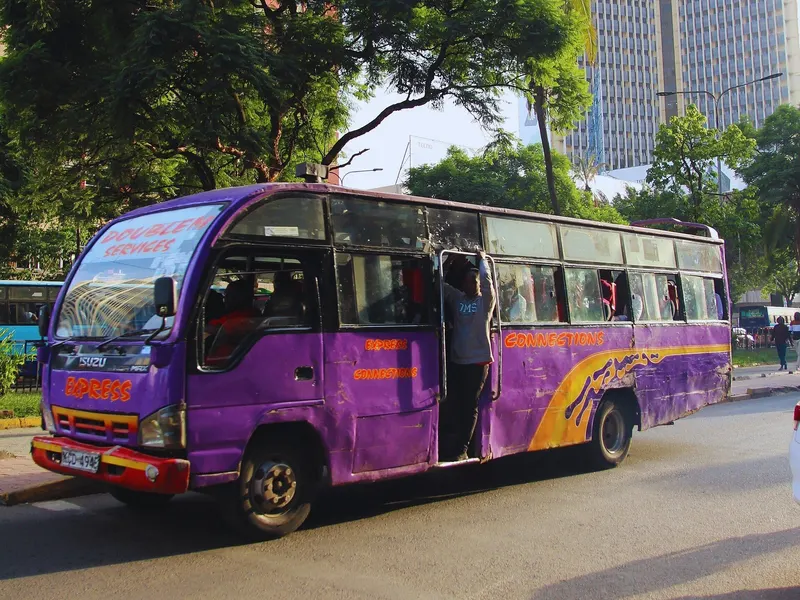
The UK government advises against matatus, the shared minibuses, because of their safety record, and against driving at night. Boda-bodas, the motorbike taxis, are quick in traffic but cause many of the city's road injuries. If you want a car for the whole day, ask your hotel to book its own driver.
Money, phones and power
Kenya uses the shilling (KSh). Most hotels and larger restaurants take cards, but street food, small shops and many taxis prefer cash or M-Pesa, Kenya's mobile money. Visitors can use M-Pesa: buy a Safaricom SIM with your passport, register for M-Pesa at a Safaricom shop, then top it up with shillings. A data-only eSIM cannot give you M-Pesa. Never share your PIN, and trust the confirmation text message, not a screenshot someone shows you.
Plugs are the British three-pin type, at 240 volts.
Weather in June and July
Nairobi sits at about 1,800 metres, so the tournament falls in its cool season. Days are mild and often grey, and evenings can drop to about 10°C. Bring a warm layer for evening kick-offs. Nairobi's malaria risk is low, and antimalarial tablets are not normally advised for the city itself, but they are for most of the rest of Kenya, including the coast.
Rules that catch visitors out
- Carry ID. Police can ask for your passport; a copy is usually accepted.
- Smoking in public is illegal outside designated areas, with fines of up to KSh 50,000.
- Do not photograph police, soldiers, government buildings or the airport. People have been arrested for it.
- Plastic bags are banned, including the bag you pack your shoes in.
- Same-sex activity is illegal in Kenya, and public displays of affection can lead to arrest.
- Do not wear camouflage or military-style clothing. Kenyan police have warned civilians against it.
What we do not know yet about Nairobi AFCON 2027
CAF has not confirmed Kenya's stadiums, ticket prices or the match schedule, and the qualifiers run until March 2027. We will update this guide when it does. Until then, every hotel and flight you book should be one you can change, because tournament plans move. Our AFCON 2027 hub carries every confirmed date as it comes.
For the rest of your trip, see our guide to travelling between the host cities and our AFCON 2027 tickets guide.
Quick answers
- Where are the Nairobi AFCON 2027 stadiums? The Raila Odinga International Stadium on Ngong Road, west of the centre, and Kasarani off Thika Road, in the north-east.
- Where should I stay? Westlands for choice and nightlife; Kilimani or Upper Hill to be close to Ngong Road.
- Is Nairobi safe for fans? Most visits pass without trouble. Use Bolt or Uber, avoid walking at night and keep valuables out of sight, especially in the city centre.
- Do I need malaria tablets? Not normally for Nairobi itself; yes for most of the rest of Kenya.